Machine translation has undergone a remarkable transformation over the past decade. What was once dismissed as producing barely comprehensible gibberish now generates text that can be surprisingly fluent and accurate. Neural machine translation has revolutionized the field, bringing capabilities that earlier statistical and rule-based systems could never achieve. Yet despite these impressive advances, machine translation remains a tool with distinct strengths and weaknesses that determine where it can be deployed effectively and where human translation remains irreplaceable.
The Strengths of Modern Machine Translation
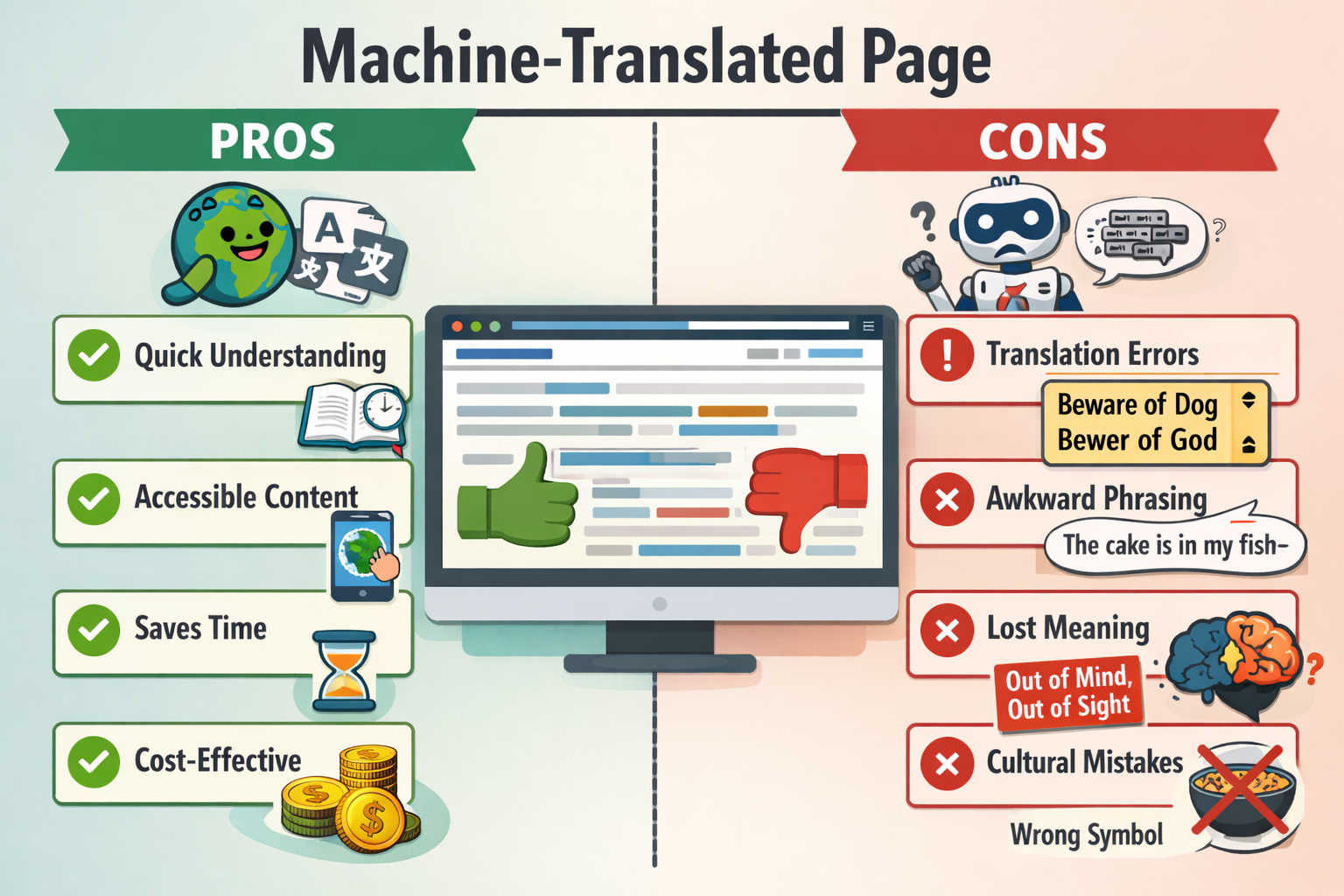
The most obvious strength of machine translation is speed. MT systems can translate millions of words in minutes, processing volumes that would take human translators months or years. This speed advantage makes MT invaluable for scenarios requiring rapid turnaround, such as translating customer support inquiries, monitoring foreign language social media, or providing gist translation of large document collections for information gathering.
Cost efficiency represents another major advantage. Once an MT system is deployed, the marginal cost of translating additional content approaches zero. For organizations dealing with massive content volumes—e-commerce product descriptions, user-generated content, technical documentation updates—MT enables translation at scales that would be economically impossible with human translators alone.
Modern neural machine translation systems excel at producing fluent, natural-sounding output. Unlike earlier systems that produced stilted, word-by-word translations, NMT captures phrase-level patterns and produces text that flows naturally in the target language. For straightforward content in common language pairs, MT output can be remarkably readable, sometimes requiring minimal post-editing.
Consistency is another area where MT demonstrates strength. When translating repetitive content with standardized terminology, MT systems apply the same translations uniformly. They don't suffer from fatigue, distraction, or the subtle variations in word choice that human translators naturally introduce. This mechanical consistency can be valuable for technical content where absolute uniformity matters.
MT systems also handle multiple language pairs simultaneously without the logistics of coordinating numerous human translators. A single MT deployment can support translation between dozens of languages, enabling truly multilingual operations that would be complex and expensive to maintain with human translation teams.
The Fundamental Weaknesses
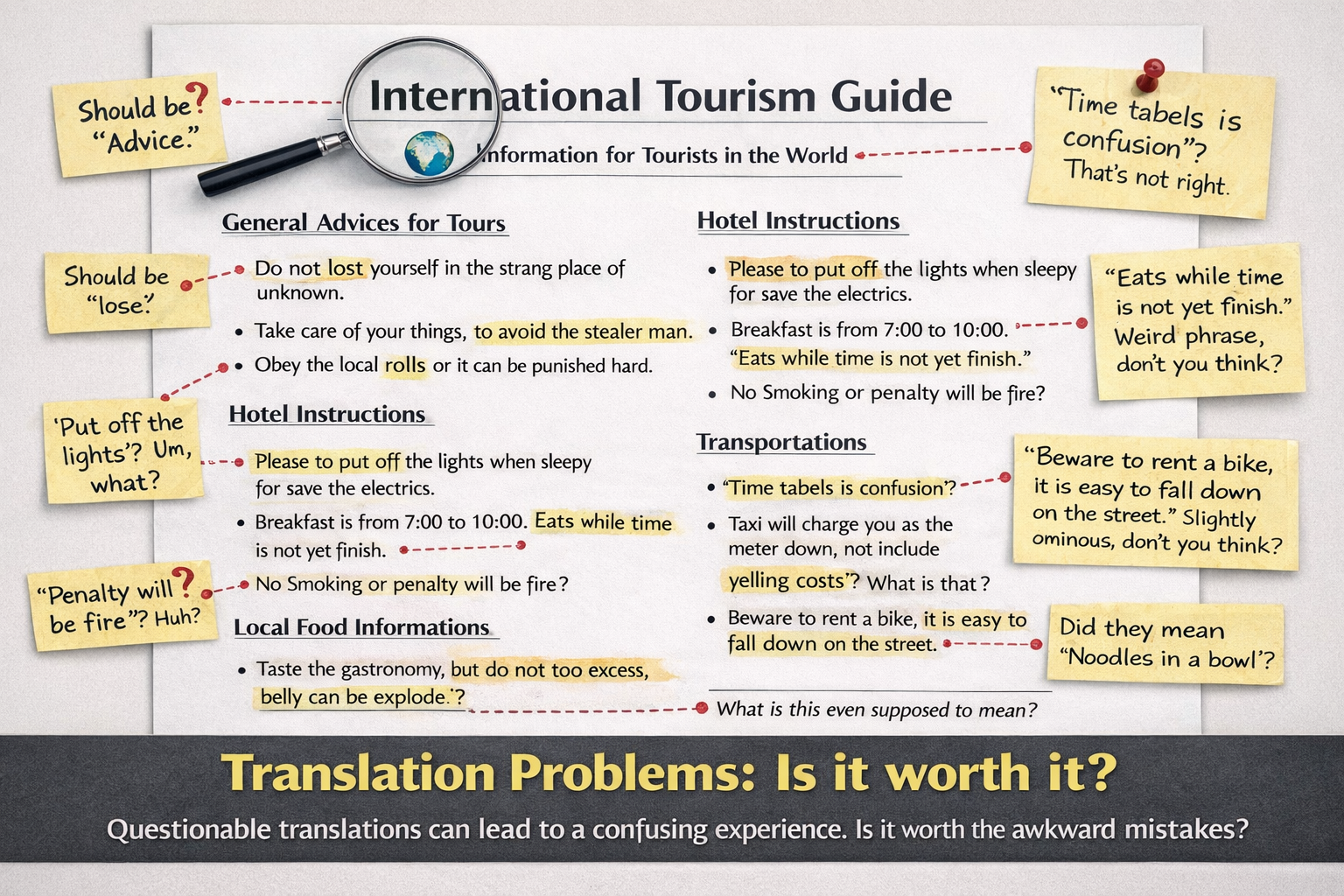
Despite these strengths, machine translation exhibits persistent weaknesses that limit its applicability. The most fundamental is the lack of true understanding. MT systems don't comprehend meaning in any human sense—they recognize patterns in training data and generate statistically probable translations. This means they can produce fluent nonsense, translating text in ways that are grammatically perfect but semantically wrong.
Context sensitivity remains a major challenge. While modern NMT systems use attention mechanisms to consider broader context than earlier approaches, they still struggle with long-range dependencies and discourse-level coherence. A system might translate each sentence perfectly in isolation while missing references that connect them, resulting in translations that lose narrative flow or argumentative structure.
Cultural and pragmatic nuances present ongoing difficulties. Idioms, humor, wordplay, and cultural references often translate poorly or nonsensically. When a French speaker says someone has "other cats to whip" (avoir d'autres chats à fouetter), the equivalent English idiom is "having other fish to fry"—but MT might produce a literal translation about whipping cats. These failures aren't random errors; they reflect the fundamental limitation of pattern matching without cultural knowledge.
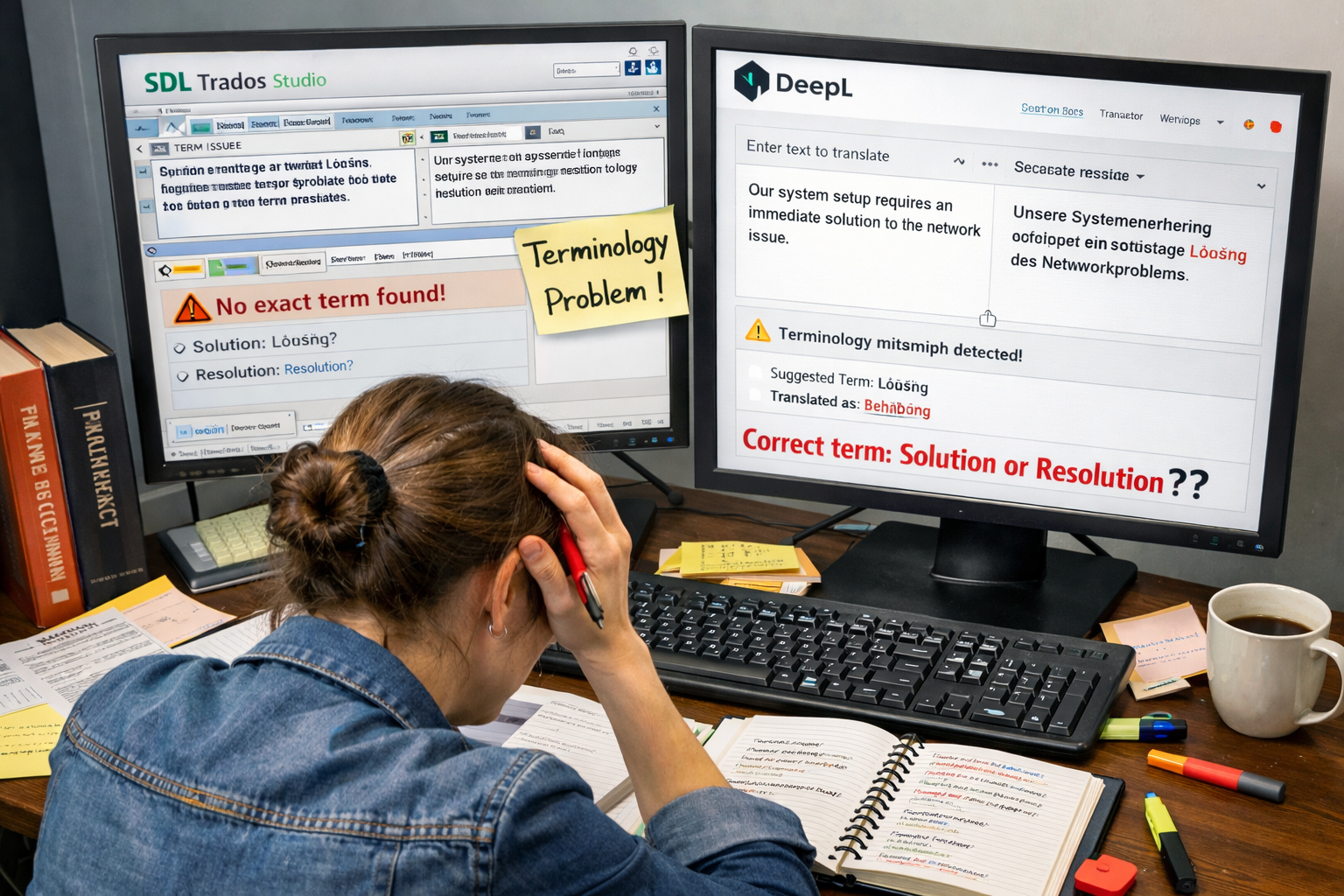
Domain-specific terminology and specialized content expose another weakness. While general-purpose MT systems perform reasonably well on everyday language, they struggle with specialized fields requiring precise terminology. Medical, legal, and technical translation demand accuracy that generic MT cannot reliably provide. Terms with multiple meanings become particularly problematic—a "court" might be legal or athletic, "cells" might be biological or electrical, and without deep domain knowledge, MT systems make predictable errors.
Quality Variation Across Language Pairs
MT quality varies dramatically depending on the language pair. High-resource language pairs like English-Spanish or English-French benefit from massive training data and achieve much better results than low-resource pairs. Languages with significant structural differences—say, English to Japanese or Arabic to German—pose greater challenges than linguistically similar pairs.
The availability of parallel training data determines much of this variation. Common European languages benefit from resources like European Parliament proceedings and vast amounts of translated web content. Less common languages lack these training resources, resulting in significantly lower MT quality. This creates a technological divide where speakers of major languages enjoy much better MT support than those using minority languages.
The Post-Editing Reality
Recognition of MT's limitations has led to the widespread adoption of post-editing workflows, where human translators refine MT output rather than translating from scratch. This hybrid approach attempts to capture MT's speed advantages while ensuring human quality. The efficiency gains depend heavily on MT quality—good MT output might require only light post-editing, while poor MT can actually slow translators down compared to translating from scratch.
Post-editing introduces its own challenges. Translators must overcome the cognitive bias toward accepting fluent-sounding but incorrect output. The work can feel less creative and more monotonous than original translation. Some translators find post-editing more fatiguing than translating, despite potentially processing more words per hour.
Effective post-editing workflows require careful planning. Organizations need clear quality expectations, appropriate translator rates that reflect the different skill set, and quality assurance processes that catch errors MT systems predictably make. Integration with CAT tools and translation memories helps maintain consistency between MT-translated content and human-translated material. Services that facilitate conversion between different translation asset formats—like those offered by platforms such as linigu.com—become valuable when managing hybrid workflows that combine MT with traditional translation memory approaches.
Specific Use Case Analysis
Different content types suit MT differently. User-generated content like product reviews or social media posts often works well with MT because perfect translation isn't critical, and the sheer volume makes human translation impractical. Readers understand they're reading translations and accept imperfection in exchange for accessibility.
Technical documentation presents a mixed case. Highly structured, repetitive technical content with controlled language can translate well with MT, especially when combined with custom terminology databases. However, safety-critical instructions or complex technical explanations still require human oversight to ensure accuracy.
Marketing and creative content represents MT's weakest area. Brand voice, persuasive language, cultural adaptation, and emotional resonance require human creativity and cultural expertise. MT might provide a rough draft for localization teams, but it cannot replace the transcreation process that effective marketing localization demands.
Legal translation is another domain where MT remains largely unsuitable for final deliverables. The precision required, the consequences of errors, and the specialized terminology make human expertise essential. MT might assist with preliminary review of documents or help lawyers identify relevant foreign-language materials, but legal translation for official purposes remains human work.
The Accuracy-Fluency Tradeoff
An interesting characteristic of modern NMT is the tension between accuracy and fluency. These systems are optimized to produce natural-sounding output, which can sometimes come at the expense of strict accuracy. An MT system might reorder information, add clarifying words, or smooth out awkward constructions in ways that improve readability but alter meaning subtly.
This makes MT particularly risky for content where every detail matters. A scientific paper's precise claims, a contract's specific obligations, or technical specifications' exact parameters might be translated fluently but incorrectly. Human translators can prioritize accuracy even when it results in slightly awkward phrasing; MT systems lack this judgment.
The Data Privacy Dimension
Many MT systems operate as cloud services, raising data privacy concerns. Sending confidential documents through public MT services potentially exposes sensitive information. Industries with strict privacy requirements—healthcare, legal services, finance—must either use on-premises MT solutions or restrict MT to non-confidential content.
This privacy consideration affects workflow design. Organizations handling sensitive materials might use human translation exclusively, deploy private MT instances, or carefully segregate content by sensitivity level. The convenience and cost savings of public MT services must be weighed against confidentiality requirements.
Evolution and Future Directions
Machine translation continues improving rapidly. Large language models demonstrate enhanced context understanding and reasoning capabilities that address some current weaknesses. Specialized MT systems trained on domain-specific data achieve much better results in their fields than general-purpose systems.
However, fundamental limitations remain. Without genuine understanding of meaning, cultural context, and communicative purpose, MT systems will continue exhibiting predictable failures. The future likely involves increasingly sophisticated hybrid approaches that leverage MT's strengths while ensuring human expertise addresses its weaknesses.
Practical Deployment Guidelines
Successful MT deployment requires matching technology to task. Organizations should use MT for high-volume, low-stakes translation where imperfection is acceptable. Human translation remains essential for content where accuracy, cultural appropriateness, or brand impact matter critically.
Clear quality thresholds help determine when MT suffices and when human intervention is necessary. Automated quality estimation tools can flag potentially problematic MT output for human review. Well-designed workflows route different content types to appropriate translation methods based on risk and requirements.
Understanding machine translation's strengths and weaknesses enables informed decisions about where to deploy this powerful but imperfect technology. MT is neither a replacement for human translation nor a mere curiosity—it's a practical tool that, used appropriately, can dramatically increase translation accessibility and efficiency while recognizing the continued essential role of human linguistic expertise.