1. Proofreading a Human Translation: Refinement and Validation


When proofreading a translation produced by a professional human translator, the reviewer starts from a position of trust.
1.1 The Assumption of Intentionality
Human translators make conscious decisions. Even when a sentence sounds unusual, the proofreader assumes there is a reason behind it—stylistic intent, contextual nuance, or domain-specific constraints.
As a result, human translation proofreading focuses on:
-
Stylistic consistency
-
Terminology alignment
-
Grammar and punctuation
-
Minor clarity improvements
-
Register and tone appropriateness
Errors, when they exist, are usually:
-
Isolated
-
Easy to identify
-
Limited in scope
The proofreader’s role is to polish, not to rebuild.
1.2 Error Patterns in Human Translations
Human translators tend to make:
-
Occasional omissions
-
Terminology slips
-
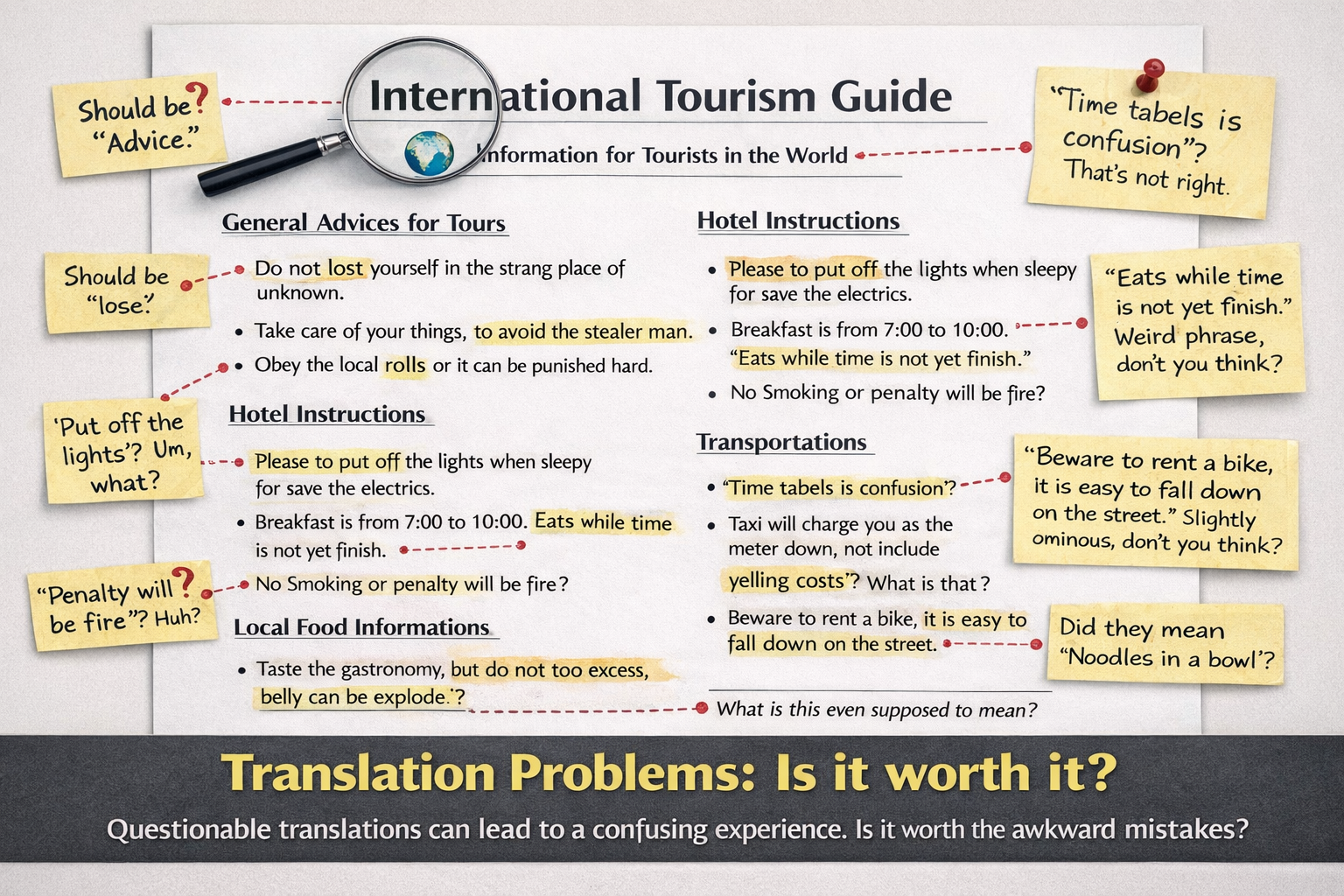
Overly literal or overly free phrasing
Crucially, these errors are predictable and logical. They follow human reasoning patterns, making them easier to detect.
2. Proofreading Machine Translation: Verification and Risk Management
Machine translation proofreading—more accurately called post-editing—is a fundamentally different activity.
Here, the proofreader must start from a position of distrust.
2.1 The Illusion of Fluency
Modern MT systems produce output that is often:
-
Grammatically correct
-
Fluent
-
Native-sounding
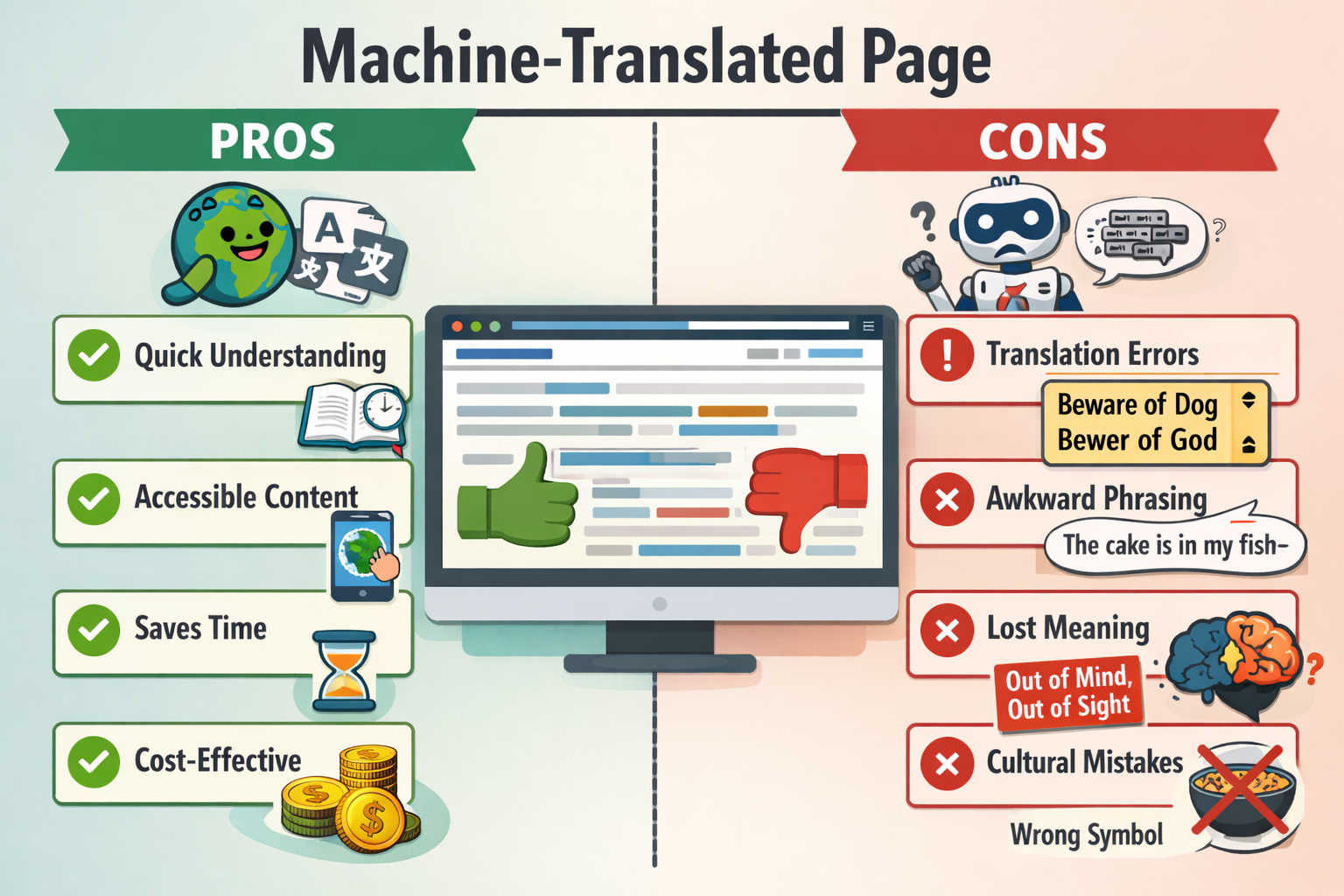
This fluency is deceptive. A sentence can read perfectly while being factually wrong, semantically distorted, or contextually inappropriate.
Unlike human translators, machines do not understand meaning. They predict text based on probability.
2.2 Typical MT Errors
Machine translation errors are often:
-
Hidden rather than obvious
-
Structurally correct but semantically wrong
-
Terminology-inconsistent across the same document
-
Context-blind (especially with pronouns, negation, and modality)
Common issues include:
-
Incorrect handling of negation
-
Wrong subject-object relationships
-
Hallucinated content
-
False friends translated with confidence
In MTPE, the proofreader must verify every sentence against the source, not just improve it.
3. Cognitive Load: Editing vs Investigating
One of the biggest differences lies in mental effort.
3.1 Human Translation Proofreading
The cognitive task is mostly:
-
Comparative
-
Stylistic
-
Confirmatory
The reviewer skims efficiently, intervening only when something feels off.
3.2 Machine Translation Proofreading
MTPE requires:
-
Constant source-target alignment
-
Sentence-by-sentence verification
-
Suspicion even when text sounds perfect
This creates higher cognitive fatigue. Ironically, MTPE can be more exhausting than translating from scratch.
4. Relationship with Terminology
Terminology management highlights another sharp contrast.
4.1 Human Translators and Terminology
Professional translators:
-
Respect term bases
-
Apply terminology consciously
-
Maintain internal consistency
Proofreaders mainly check compliance.
4.2 Machine Translation and Terminology
MT engines:
-
May ignore term bases
-
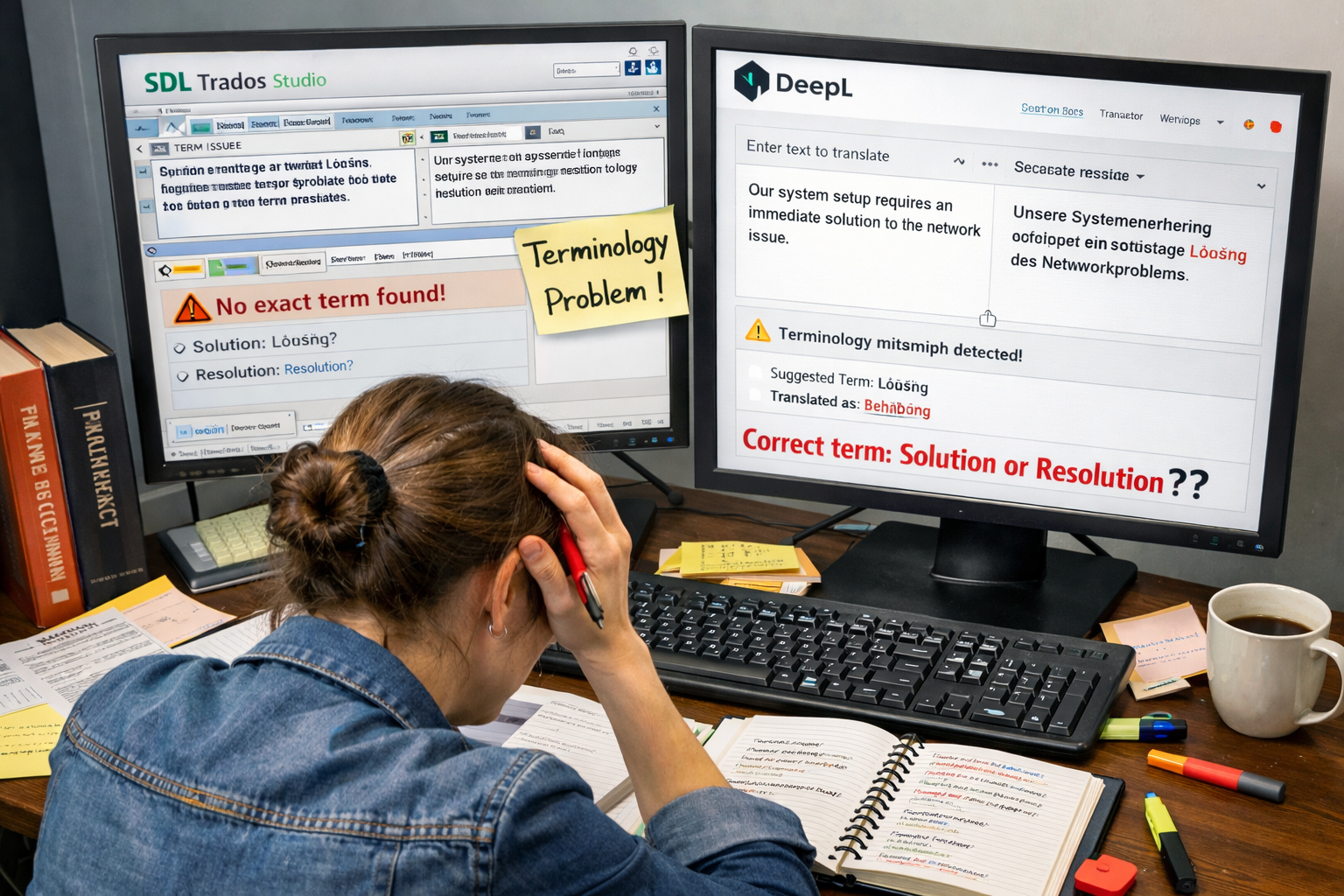
Translate the same term differently within the same paragraph
-
Prefer statistically common words over approved terminology
Post-editors must actively enforce terminology, often rewriting large sections to restore consistency.
5. Responsibility and Risk
In human translation proofreading, responsibility is shared:
-
Translator → Primary accountability
-
Proofreader → Quality enhancement
In machine translation post-editing, responsibility shifts heavily to the editor.
If an MT error slips through:
-
The machine is not accountable
-
The post-editor bears full responsibility
This changes not only workflow but also professional liability.
6. Speed Expectations and the MT Productivity Myth
A common misconception is that MTPE is always faster.
Reality Check:
-
Simple, repetitive texts → MTPE is faster
-
Complex, legal, medical, or marketing texts → MTPE can be slower
Why?
-
Because detecting subtle MT errors takes time
-
Because fluency hides mistakes
-
Because reworking bad MT can cost more than rewriting
Speed without quality is not productivity—it is risk.
7. Quality Metrics Are Not the Same
Human translation proofreading is often evaluated by:
-
Readability
-
Style
-
Terminology accuracy
MTPE quality must also include:
-
Semantic fidelity
-
Error criticality
-
Risk impact assessment
A fluent but wrong MT output is worse than an awkward but accurate human translation.
8. Conclusion: Same Word, Different Profession
Proofreading a human translation and post-editing a machine translation are not interchangeable skills.
| Aspect | Human Translation Proofreading | Machine Translation Post-Editing |
|---|---|---|
| Trust Level | Moderate to high | Low by default |
| Focus | Refinement | Verification |
| Error Type | Visible, logical | Hidden, deceptive |
| Cognitive Load | Medium | High |
| Responsibility | Shared | Editor-centric |
As machine translation becomes more widespread, understanding this distinction is no longer optional. Treating MTPE as “just proofreading” underestimates the complexity, risk, and expertise required.
In the age of AI, the proofreader is no longer just a polisher of language—but a guardian of meaning.